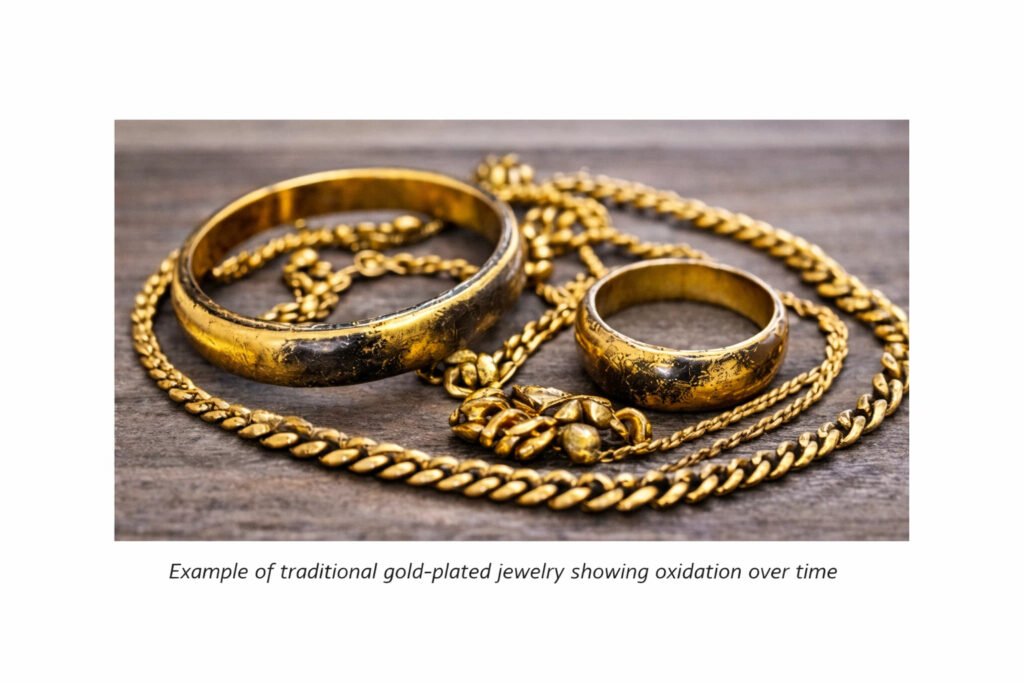
Have you ever noticed your favorite gold jewelry slowly turning dark, dull, or even black after a few months of wear? You’re not alone—and it doesn’t necessarily mean your jewelry is “fake.”
In this article, we’ll break down why gold jewelry changes color, what really causes tarnishing, and why stainless steel PVD gold plating has become one of the most reliable solutions for modern, everyday jewelry.
1. Why Does Gold Jewelry Turn Black?
Pure gold (24K) doesn’t oxidize or tarnish. However, most gold jewelry is not pure gold.
To make gold strong enough for daily wear, it’s usually mixed with other metals such as:
Copper
Silver
Nickel
Zinc
These metals react with air, moisture, sweat, and chemicals, which leads to oxidation. Over time, this reaction causes discoloration, dark spots, or a blackened surface.
In short: It’s not the gold that turns black—it’s the metals mixed with it.
2. Common Causes of Jewelry Tarnishing
Even high-quality jewelry can tarnish faster due to everyday habits:
Sweat & Skin Chemistry Your skin’s pH level and sweat can accelerate oxidation, especially in hot or humid environments.
Water Exposure Showering, swimming, or washing hands exposes jewelry to minerals, chlorine, and salt—key triggers for tarnishing.
Perfume & Skincare Products Alcohol, acids, and oils in cosmetics can slowly break down traditional gold plating.
Low-Quality Plating Thin electroplating wears off quickly, exposing the base metal underneath.
3. What Is Stainless Steel PVD Gold Plating?
This is where PVD plating changes everything.
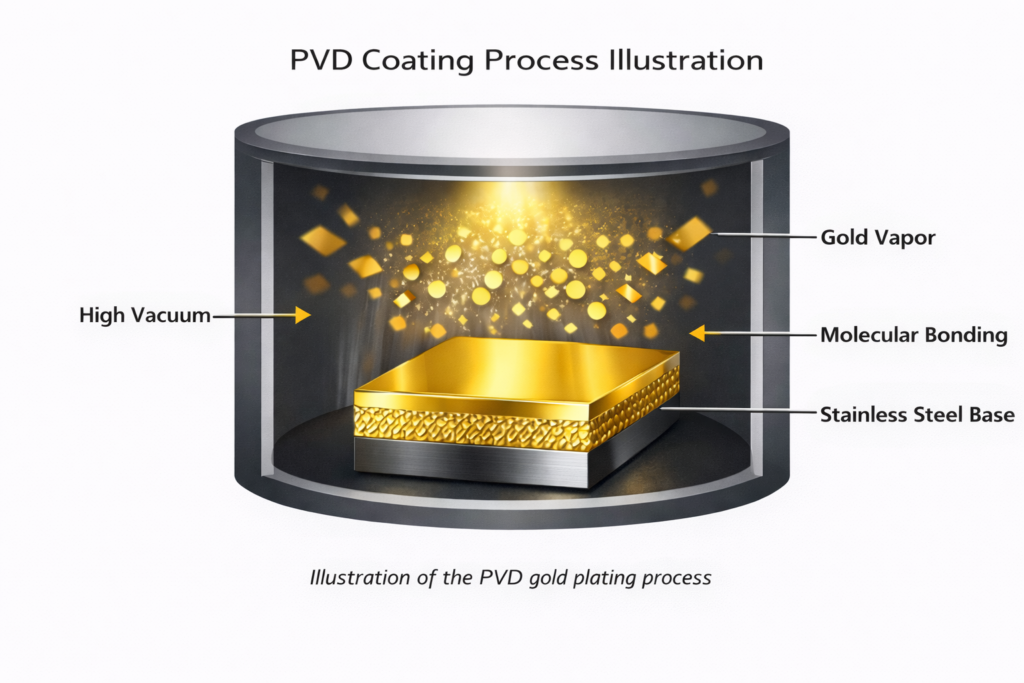
PVD (Physical Vapor Deposition) is an advanced coating technology used in aerospace, medical tools, and luxury watches.
Instead of “painting” gold onto the surface, PVD:
Uses high vacuum and extreme heat
Bonds gold particles at a molecular level
Creates a dense, ultra-strong coating
When applied to 316L surgical stainless steel, the result is jewelry that looks luxurious but performs exceptionally well.
4. Why PVD Gold-Plated Stainless Steel Doesn’t Turn Black
Compared with traditional gold-plated jewelry, stainless steel PVD jewelry offers:
✔ Tarnish Resistance
PVD coatings don’t oxidize easily and won’t react with air or moisture.
✔ Water & Sweat Safe
Shower-safe, sea-water safe, and ideal for daily wear.
✔ Long-Lasting Color
The color stays rich and consistent for years, not months.
✔ Hypoallergenic
316L stainless steel is skin-friendly and nickel-safe.
✔ Sustainable Choice
Less gold waste, longer lifespan, and lower environmental impact.
 USD
USD  GBP (GBP £)